


Como um moinho de bolas se trata?
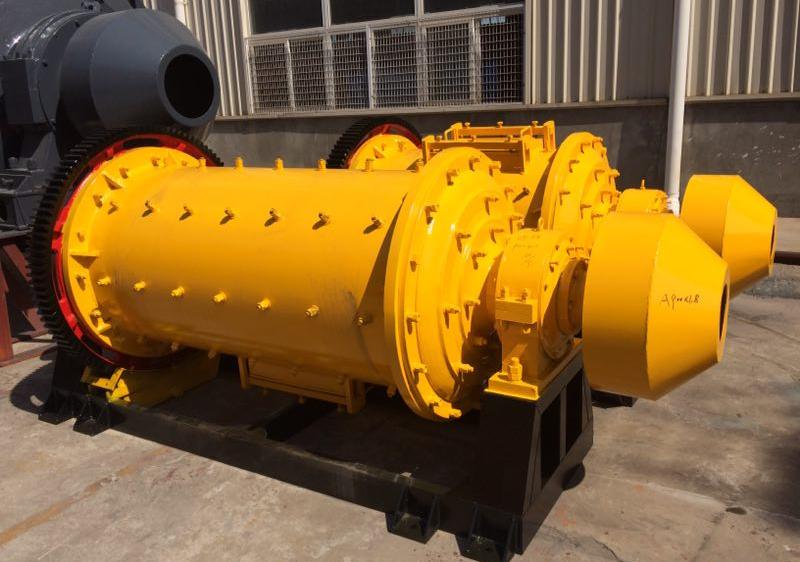
A ball mill is composed of a horizontal cylinder, a hollow shaft for feeding and discharging materials, E uma cabeça de moagem. The cylinder is a long cylinder with a grinding body inside. The cylinder is made of steel plate and is fixed to the cylinder by a steel lining.
The grinding body is generally a steel ball and is loaded into the cylinder according to different diameters and a certain proportion. The grinding body can also be made of steel segments. The material is selected according to the particle size of the grinding material.
The material is loaded into the cylinder through the hollow shaft at the feeding end of the moinho de bola. When the cylinder of the ball mill rotates, the grinding body is attached to the cylinder lining due to inertia, força centrífuga, e atrito, and is carried away by the cylinder. Quando é trazido para uma certa altura, it is thrown down due to its own gravity. The falling grinding body crushes the material in the cylinder like a projectile.
Processo de trabalho do moinho de bolas
The material is fed into the first chamber of the mill evenly through the feeding device and the hollow shaft spiral. There are stepped linings or corrugated linings in the chamber, which are filled with steel balls of various specifications.
The centrifugal force generated by the rotation of the cylinder brings the steel balls to a certain height and then falls, which has a heavy impact and grinding effect on the material. After the material is roughly ground in the first chamber, it enters the second chamber through a single-layer partition plate. The chamber is inlaid with a flat lining plate and contains steel balls to further grind the material. The powder is discharged through the discharging grate plate to complete the grinding operation.
During the rotation of the cylinder, the grinding body also slides down, and the material is ground during the sliding process. In order to effectively utilize the grinding effect, when grinding materials with large particle size, geralmente 20 malha, the grinding body cylinder is divided into two sections by a partition plate, aquilo é, uma lixeira dupla.
When the material enters the first bin, it is crushed by steel balls. When the material enters the second bin, the steel section grinds the material. The qualified ground material is discharged from the hollow shaft at the discharge end. When grinding materials with small feed particles, como areia Não. 2 escória e cinza volante grossa, the mill cylinder can be made of a single bin cylinder mill without a partition, and the grinding body can also be made of steel sections.
The raw material is fed into the hollow cylinder through the hollow shaft neck for grinding. The cylinder is filled with grinding media of various diameters (bolas de aço, barras de aço ou cascalho, etc.). When the cylinder rotates at a certain speed around the horizontal axis, o meio e as matérias-primas no cilindro são ejetados ou rolados sob a ação da força centrífuga e do atrito conforme o cilindro atinge uma certa altura.
When their own gravity is greater than the centrifugal force, they will break away from the inner wall of the cylinder and crush the ore due to the impact force. Ao mesmo tempo, during the rotation of the mill, the sliding movement of the grinding media between each other also produces a grinding effect on the raw materials. The ground materials are discharged through the hollow shaft neck.
Mechanical structure of ball mill
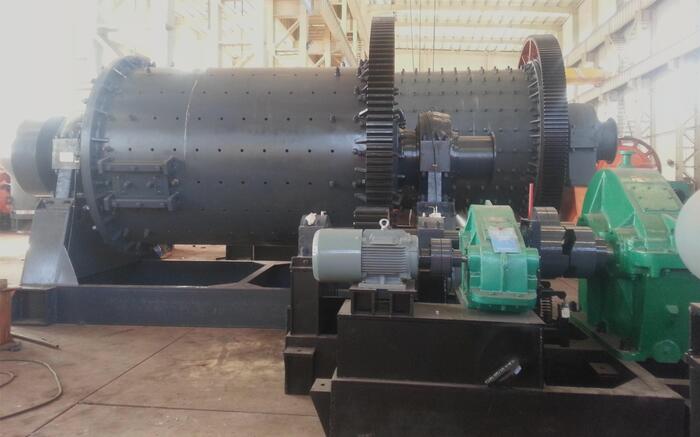
The ball mill consists of the main parts such as the feeding part, a parte de descarga, a parte rotativa, and the transmission part (redutor, Pequena engrenagem de transmissão, motor, controle eletrônico). The hollow shaft is made of cast steel, the inner lining is removable, the rotating large gear is made of cast gear hobbing, and the cylinder is inlaid with wear-resistant lining, que tem boa resistência ao desgaste. This machine runs smoothly and works reliably. It is widely used for material grinding in non-ferrous metals, metais ferrosos, non-metallic ore dressing fields, indústria química, and building materials industry.
The main body of the ball mill includes a cylinder, which is lined with a lining made of wear-resistant material, a bearing that supports the cylinder and maintains its rotation, e uma parte de condução, como um motor, uma engrenagem de transmissão, uma polia, uma correia em V, etc..
The parts called blades are generally not the main parts. The parts at the feed end have an internal spiral in the feed port, which can be called internal spiral blades, and the parts at the discharge end have an internal spiral in the discharge port, which can also be called internal spiral blades.
Além disso, if a screw conveyor is used in the auxiliary equipment at the discharge end, there will be parts called spiral blades in the equipment, mas estritamente falando, it is no longer a part of the ball mill.
According to the material and the discharge method, dry ball mills and wet grid ball mills can be selected. Energy-saving ball mills use self-aligning double-row radial spherical roller bearings, with low operating resistance and significant energy-saving effects. Na parte do cilindro, a conical cylinder is added to the discharge end of the original cylinder, which not only increases the effective volume of the mill, but also makes the medium distribution in the cylinder more reasonable.